

Underground Blossom
Rusty Lake
I approached Underground Blossom as the kind of adventure game that can work especially well in a shared household. It is compact enough to discuss between people, strange enough to give everyone something to think about, and focused enough that one person can play while another watches from the sofa. Rusty Lake builds its games around unsettling places, visual clues, and story fragments, and this one turns a metro journey into a sequence of memories to unlock.
That setup makes it different from a typical game passed around on a family tablet. It is not a competitive title where everyone needs a separate turn, and it is not a noisy action game demanding constant attention. In my experience, its strongest use is as a quiet, cooperative viewing experience: one person controls the game, while someone else notices a detail, suggests an interpretation, or remembers an object seen earlier. The mood is eerie rather than cheerful, so the household atmosphere matters as much as the gameplay.
A metro journey that rewards careful attention
The central idea is simple to understand but rich in execution: memories are connected to metro stations, and each station presents its own visual problem to solve. Instead of moving through a large open world, I spent my time examining a confined scene, testing objects, and working out how one action affected the next. That limited scale is a major strength because it keeps the game directed. I rarely wondered where I was supposed to go; the real question was what I had failed to notice.
The adventure category label fits, but it does not fully explain the experience. This is closer to a surreal point-and-click puzzle journey than to an exploration game with combat, collecting, or character statistics. There is no need to prepare a loadout or learn a complicated control scheme. The challenge comes from observation and interpretation. A small visual change can be more important than a long conversation, and an item that appears decorative may deserve closer attention.
I found that the best way to play is slowly. Tapping everything at random may occasionally reveal progress, but it weakens the satisfaction of solving a puzzle. When I paused to inspect the scene, compare symbols, and remember the order of events, the game felt much more deliberate. This is one of the first useful household lessons: if several people are watching, encourage everyone to describe what they see before anyone starts tapping repeatedly.
Related News






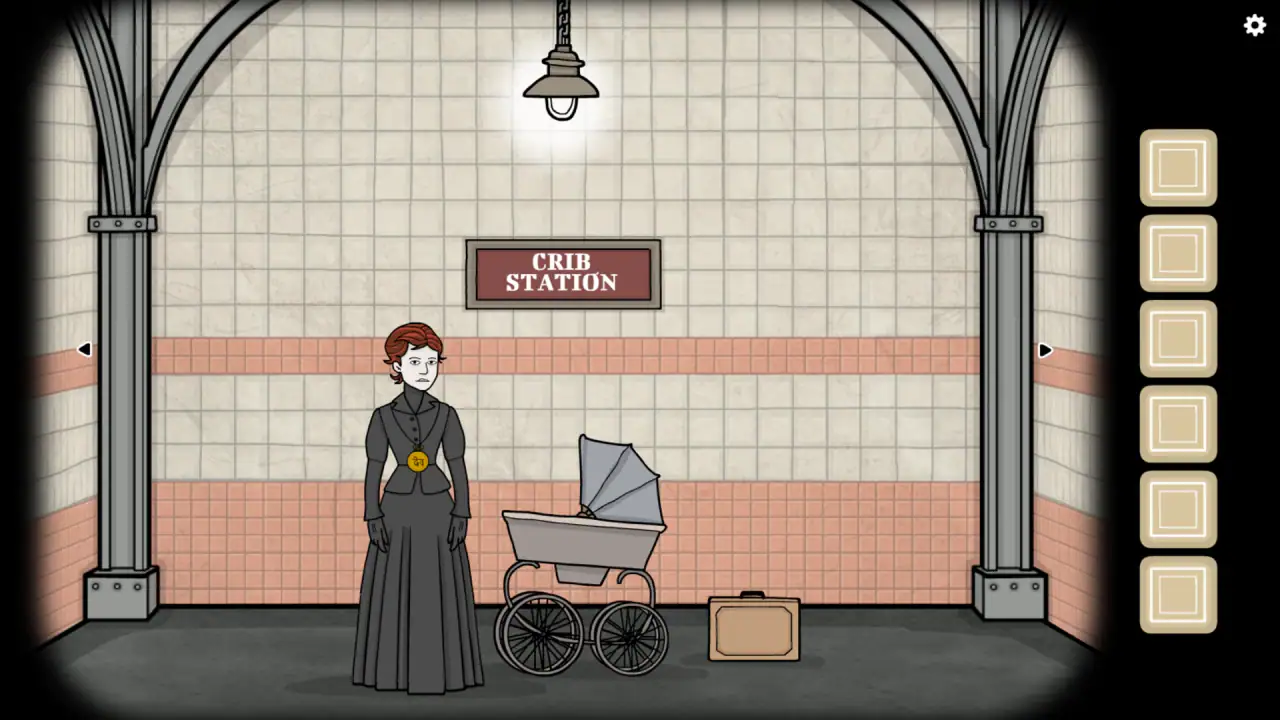
The presentation supports that method. Rusty Lake uses a distinctive, unsettling visual style rather than aiming for realistic environments. The metro setting feels familiar enough to understand immediately, yet the details push it into dreamlike territory. That contrast is what makes the puzzles memorable. A station is not just a background; it becomes a container for a particular emotional moment, and the objects around it often carry more meaning than their ordinary appearance suggests.
Why it works on a shared device
On a shared phone or tablet, the game has a practical advantage over many adventure alternatives: the controls are easy to pass between players. One person can hold the device and another can guide the search without needing a second controller. I would not describe it as a multiplayer game, because the interaction is still centered on one active player, but it naturally supports informal cooperation.
A realistic evening might look like this: one person plays for ten minutes after dinner, another notices a pattern in the station, and a third person remembers a clue from an earlier scene. Nobody needs to commit to a long session, and nobody has to compete for a score. The game can become a small shared mystery rather than an isolated screen activity. That makes it a better fit for households that enjoy discussing stories and puzzles than for people looking for a group game with clearly defined turns.
Gallery
There is also a useful trade-off here. Shared play makes difficult moments less frustrating because a fresh pair of eyes can spot an overlooked clue. At the same time, conversation can spoil the intended rhythm for someone who wants to experience every discovery alone. I would decide in advance whether the player wants hints, suggestions, or complete silence. That small agreement prevents the common problem where a helpful observer accidentally removes the satisfaction of solving a scene.
Because the game is built around visual details, a larger shared screen can make observation more comfortable than a small phone. A tablet is not essential, but it can improve group viewing when several people are gathered around. The limitation is that the game remains designed for touch interaction on one device, so a household should not expect separate profiles, simultaneous controls, or a formal pass-and-play system simply because several people are watching.
What to settle before installing it
The game is paid, with a price of $2.99, so it is worth deciding who will use the device and whose account will handle the purchase before downloading it. That sounds mundane, but shared-device confusion is more irritating when a game is tied to one household member’s store account and another person assumes it belongs to everyone. I would make the purchase from the account normally used for the shared device and keep that arrangement clear among the people who play.
It runs on Android devices using at least version 6.0, which covers a broad range of older phones and tablets. Compatibility is only one part of the setup, though. The more important practical question is whether the device is comfortable for close visual inspection. If the screen is small, dim, or frequently interrupted by notifications, the carefully placed clues become harder to appreciate. A quiet session with notifications reduced will suit this game better than trying to play while constantly switching between apps.
The current version is 1.1.30. I would still check that the device has enough free space and that the operating system is behaving normally before beginning, especially on an older shared tablet. The game’s puzzles depend on remembering visual information, so crashes, accidental app switching, or a screen that fails to register taps can break the chain of thought more severely than they would in a casual arcade game.
Another boundary concerns ownership of progress. If several people use one installation, they should treat the game as a shared journey rather than assuming that each person has an independent save space. I would not begin a serious solo playthrough on a device where someone else is already using the same game unless everyone agrees on how progress will be handled. In a household, this simple conversation is more useful than promising a separate experience that the game may not be designed to provide.
The same principle applies when moving between devices. A player who starts on a phone and later expects to continue on a tablet should plan around the game’s actual installation and progress behavior rather than assuming that every device shares the same state automatically. For a short adventure, finishing on one primary device is the least confusing approach. It also preserves the continuity that makes the sequence of stations work as a story.
Coordinating hints without taking over
The puzzles invite discussion, but good coordination requires restraint. I found it helpful to divide the task into three simple roles: one person controls the screen, one describes visible patterns, and another keeps track of objects or sequences. These roles can change naturally, but naming them prevents everyone from shouting different instructions at once. It also gives quieter players a meaningful way to contribute without needing to hold the device.
A useful rule is to ask a question before giving an answer. Instead of saying exactly what to tap, an observer might ask whether a symbol appeared somewhere else or whether an object changed after the previous action. That preserves the player’s ownership of the solution. It is particularly valuable here because the game’s appeal comes from connecting details, not merely reaching the next station.
I would also keep a small note nearby for sequences that are easy to forget. This is not a substitute for solving the puzzle; it is a way to reduce repeated backtracking when a household session is interrupted. If a child or another family member needs to leave halfway through a scene, writing down a discovered order or unusual symbol can make the next session feel continuous instead of forcing everyone to reconstruct the entire thought process.
There is a subtle advantage to playing in short household sessions: the game’s odd images and unresolved questions have time to settle. A group can stop after a station, discuss what happened, and return later with a clearer perspective. The disadvantage is that a long gap can make visual sequences harder to remember. I would save notes at natural stopping points and avoid ending immediately after discovering a complicated clue unless someone records it.
For solo players, the same advice works in a different form. Take screenshots only when the device’s normal tools make that convenient and appropriate, or write down patterns manually. More importantly, resist searching for a walkthrough at the first sign of difficulty. A guide will solve the immediate obstacle, but it can flatten the strange, investigative atmosphere that gives the game its identity. If help is necessary, a small hint is preferable to reading a complete solution.
Age, mood, and household trust
The content rating is Everyone 10+, which gives parents and shared-device owners a useful starting point, but the number alone does not describe the emotional tone. The game is unsettling, mysterious, and occasionally macabre in its presentation. It is not the sort of adventure I would choose for a young child who dislikes disturbing imagery simply because the controls are easy. A child who enjoys spooky stories may be comfortable with it, while another player of the same age may find the atmosphere unpleasant.
That is where trust and conversation matter. I would let a parent or guardian preview the opening portion before offering it to a sensitive player, then explain that the game is built to create unease rather than provide a bright, reassuring adventure. This is not about treating the title as dangerous; it is about matching its mood to the person using the device. The age guidance and the actual emotional response are related, but they are not identical.
The game is also a better choice for readers who enjoy interpreting unusual stories than for players who need every event explained immediately. Rusty Lake’s style often leaves room for questions and symbolic connections. If someone becomes frustrated by ambiguity, the household may have a better time with a more direct puzzle game or a clearly narrated adventure. On the other hand, players who enjoy discussing what a scene might mean will find more to talk about after the screen is turned off.
For younger household members, I would make the first session a shared one rather than handing over the device without context. That lets an adult notice whether the imagery is comfortable and helps the child understand that the game is about observation, not speed. It also creates a natural opportunity to pause if a scene becomes too intense. Since the experience does not depend on fast reflexes, stopping and returning later does not undermine the gameplay.
Privacy and account boundaries are part of the same decision. The game is a paid adventure, not a social platform that needs to become a family communication channel. I would keep the installation associated with the household’s agreed store account, avoid mixing personal purchases casually, and make clear who is allowed to reset or continue progress. These are ordinary shared-device habits, but they prevent avoidable arguments around a game that is otherwise easy to enjoy together.
How it compares with familiar alternatives
Compared with action adventures, this is much calmer in its demands. There are no reflex-heavy encounters to master, so it suits players who prefer thinking to reacting. Compared with casual hidden-object games, it feels more authored and atmospheric; the purpose is not simply to clear a scene, but to understand how the scene fits into a larger chain of memories. Compared with large narrative adventures, it is more focused and easier to share in short sessions, although it offers less freedom to wander.
That focus is both its identity and its main limitation. If I want a game that can occupy a household for many evenings through open exploration, character development, or repeated challenges, I would choose something else. This adventure is better when the goal is a concentrated mystery with a strong visual personality. Players who dislike tapping through scenes, examining details, or revisiting a clue will likely find the pace slow rather than thoughtful.
It also differs from conventional cooperative puzzle games. In a formal co-op title, each participant may have a separate role, screen, or set of abilities. Here, cooperation is conversational and informal. One person remains in control while others interpret what they see. That makes it accessible in a living room, but it also means that a dominant player can easily take over. Households should treat turn-taking and hint-giving as social agreements, because the game itself is not replacing that coordination.
The price makes the decision easier for someone specifically seeking a polished, self-contained puzzle adventure rather than an endlessly replayable game. I would not buy it expecting daily challenges, competitive progression, or a large collection of unrelated activities. I would buy it for a focused story experience that rewards attention and gives a small group something unusual to unpack together.
The game has an average rating of 4.9 from around 13K ratings, with roughly 864 written reviews, and it has passed 100K installs. Those figures suggest that the concept connects strongly with its audience, but they do not remove the need to consider personal taste. A high rating cannot make an eerie atmosphere feel cheerful, and popularity cannot turn a linear puzzle journey into a sandbox. The useful conclusion is narrower: many players have responded well to this particular blend of mystery, visual design, and station-based progression.
Who should play it, and who should skip it
I would recommend it to someone who enjoys solving puzzles by examining a scene carefully, likes unusual storytelling, and is happy to let a game remain slightly mysterious. It is especially appealing for a pair of friends, siblings, or family members who want to collaborate without needing two devices. It can also suit a solo player looking for a quiet evening game that does not demand rapid reactions or a long tutorial.
I would be more cautious about recommending it to a household with very young children, even though the age rating is Everyone 10+. The visual mood deserves an honest conversation first. I would also skip it for a player who wants extensive customization, a broad map, direct combat, or a clear checklist of objectives. The game’s pleasure comes from its controlled path and strange details; those same qualities may feel restrictive to someone who equates adventure with freedom.
For a shared device, I would choose one primary player to manage progress and invite others to observe, suggest, and take turns with the controls. I would agree on whether hints are welcome, keep short notes for complicated sequences, and play in a quiet setting where small visual changes are easy to notice. Those habits make a bigger difference here than technical enthusiasm, because the game is built around concentration rather than constant activity.
Rusty Lake is the developer behind the experience, and its creative fingerprint is clear in the way ordinary metro imagery becomes symbolic and unsettling. The game does not try to imitate a conventional family adventure. Instead, it offers a compact mystery that can sit comfortably between a solo puzzle session and a shared household conversation. That unusual middle ground is where it feels most successful.
My household verdict is positive, with a clear condition: choose it for atmosphere, observation, and discussion, not for speed or endless content. At $2.99, it is a reasonable purchase for players who already know they enjoy surreal puzzle adventures and for families willing to share one carefully paced journey. I would install it on the device that offers the most comfortable screen, establish who owns the progress, and begin with a group session. If the mood clicks, the metro stations become excellent conversation starters; if it does not, no amount of shared coordination will make the eerie tone feel like a conventional family game.
FAQs for Underground Blossom
What is Underground Blossom?
Underground Blossom is a narrative adventure game from Rusty Lake, the creators of the distinctive Cube Escape series. You travel through the memories of Laura Vanderboom by visiting a series of symbolic subway stations. Each stop represents an important moment in her life, combining point-and-click exploration, item-based puzzles, surreal storytelling, and the studio’s recognizable dark, hand-drawn atmosphere.
How does the gameplay work in Underground Blossom?
The game is played as a point-and-click adventure. You tap around each subway station to inspect objects, collect items, speak with characters, and solve puzzles. Progress depends on noticing visual clues and understanding how objects connect, so some solutions may require experimentation. The experience is more focused on exploration, logic, and interpretation than on action, combat, or fast reflexes.
Is Underground Blossom suitable for beginners?
Yes, Underground Blossom is accessible to players who are new to Rusty Lake games, although several puzzles can be intentionally cryptic. The game does not demand advanced gaming skills, but it rewards careful observation and patience. Players familiar with the Cube Escape universe may recognize recurring themes and references, while newcomers can still follow the main journey without needing extensive prior knowledge.
How long does it take to complete Underground Blossom?
Underground Blossom is a relatively compact adventure, making it suitable for players who prefer a focused experience rather than a very long campaign. Completion time depends on how quickly you understand the puzzles and whether you explore every detail or pursue optional discoveries. Expect a few hours for a first playthrough, with additional reasons to return if you want to uncover all secrets.
Does Underground Blossom include multiple endings or extra content?
Underground Blossom offers more than a straightforward trip from one station to the next. Alongside its main progression, the game contains hidden interactions, optional discoveries, and additional details for players willing to investigate thoroughly. These elements add context to the story and encourage replaying sections after you understand more of the world. The experience is designed around mystery, atmosphere, and uncovering meaning rather than conventional rewards.
Pros
- Atmospheric hand-drawn visuals create a distinctive
- dreamlike identity.
- Short chapters make it easy to play in brief sessions.
- Environmental puzzles reward careful observation rather than reflexes.
- The soundtrack strengthens the game's eerie
- emotional mood.
- Works well for players who enjoy symbolic
- story-driven adventures.
Cons
- Some puzzles rely on obscure clues and may require trial and error.
- The surreal narrative can feel confusing without close attention.
- Its short length may feel limited compared with its premium price.
- The slow pace may not appeal to players seeking action or fast progression.
- A few interactions are easy to overlook in the detailed environments.


